



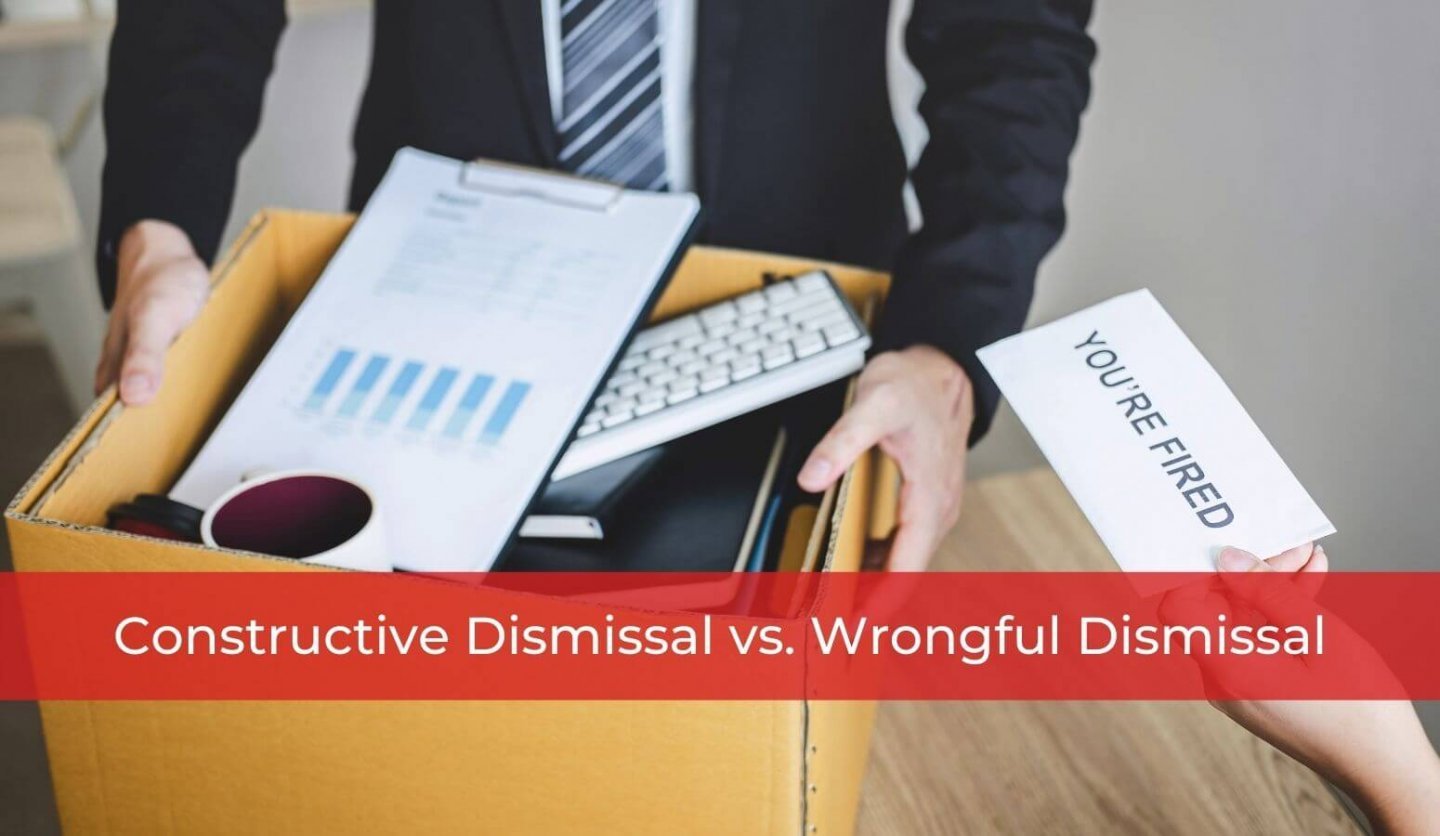
Employers and employees always enter into an employment agreement with the hope of a long and prosperous working relationship, however, these relationships sometimes come to an end for various reasons. When an employer terminates an employee’s employment they can do so with or without cause. Termination with cause alleged should be reserved for the most egregious cases of wrongdoing, as a cause termination has been referred to as the “capital punishment” of employment law because the employee does not receive a severance package.
Wrongful dismissal claims
A wrongful dismissal refers to the termination of an employee’s employment by an employer without just cause and without providing sufficient reasonable notice or pay in lieu of notice. In other words, a wrongful dismissal case claims that the employer terminated the employee wrongfully based on employment law.
Unlike a wrongful dismissal case where it is very clear that a termination transpired, constructive dismissal cases are more nuanced and dependent on the individual circumstances.
Constructive dismissal claims
A constructive dismissal occurs when an employer fundamentally alters the employee’s employment conditions to their detriment, to such an extent that it can be said that the employer has effectively ended the employment relationship. Some examples of constructive dismissals include significant changes to an employee’s job duties, compensation or work environment. In such a scenario, the employee can assert that they have been constructively dismissed and seek damages for the constructive termination of their employment, also usually in the form of a severance package.
What is the difference between wrongful dismissal and constructive dismissal?
Wrongful dismissal happens when you are let go without proper notice, severance, or legal cause. In these cases, the termination is clear, and the legal question is whether your employer met their obligations under the law.
Constructive dismissal is different. Your job may not have been officially terminated, but your employer has made major changes to your role, pay, or working conditions. If those changes breach the terms of your employment, the law may treat the relationship as ended.
Some people also come across the term “unjust dismissal” and assume it means the same thing. It does not. Unjust dismissal is a specific legal claim available only to federally regulated employees, such as those in banking, telecommunications, or aviation. It is governed by the Canada Labour Code, not provincial law.
The language around dismissal can be confusing. At Whitten & Lublin, we help clients understand which legal path applies and take strategic steps to ensure their rights are fully protected.
Is it worth it to sue for constructive dismissal?
Constructive dismissal cases can be strong, but they require a careful and well-informed approach. Suing without a strategy or without understanding what courts expect can result in unnecessary financial risk.
If your employer has made your job unbearable, cut your pay, or pushed you out through unfair treatment, do not quit without seeking legal advice. At Whitten & Lublin, we can assess whether your case meets the legal threshold to claim constructive dismissal and build a path forward that protects your income and your legal position.
What are the grounds for constructive dismissal in Ontario?
Constructive dismissal occurs when your employer makes significant, unilateral changes to your job without your consent. Common examples include:
- A reduction in pay or benefits
- A demotion or shift in core responsibilities
- A forced relocation
- Workplace bullying, harassment, or a toxic environment
- Disciplinary measures that are unfair or retaliatory
- An unpaid suspension
These cases are highly fact-specific. At Whitten & Lublin, we examine the details and provide a clear legal opinion on whether your employer has crossed the line and what compensation you may be entitled to pursue.
What are the five common reasons for dismissal?
Ontario law allows employers to end employment for legitimate reasons, but few meet the strict standard of “just cause.” Common reasons for termination include:
- Performance concerns
- Misconduct
- Restructuring or redundancy
- Breach of workplace policy
- Inability to meet job expectations
However, in most cases, employers are still legally required to provide reasonable notice or severance.
What is the maximum compensation for wrongful dismissal?
There is no fixed cap. Compensation depends on your age, length of service, role, pay, and how long it may take to find comparable work. For some employees, this can amount to more than a year’s worth of earnings.
In many situations, employers offer only the minimum required under legislation. At Whitten & Lublin, we review your employment contract and determine your full entitlements whether they be under the common law or Employment Standards Act (ESA) and pursue the outcome that reflects your true legal value.
Take Control of Your Employment Situation
We at Whitten & Lublin are happy to provide insight and advice into your specific circumstances. If you are looking for employment lawyers and would like more information about what Whitten & Lublin can do for you in terms of constructive dismissal or wrongful dismissal, please contact us online or by phone at (416) 640-2667 today.

